When you file an insurance claim after an accident, property damage incident, or injury, the insurance company may ask you to provide a recorded statement. Many people feel pressured to comply immediately, especially when the request comes from an adjuster who seems friendly or helpful. But can your insurance company actually require a recorded statement?
The answer depends on whose insurance company is asking and what type of claim is involved.
Working with Your Insurance Carrier: What to Consider
If you are dealing with your own insurance company, your policy may require you to cooperate with the claims investigation process. This often includes providing information about what happened, and in some cases, giving a recorded statement. Most insurance policies contain a “cooperation clause” requiring policyholders to assist in the investigation of a claim. Refusing to cooperate could potentially affect coverage.
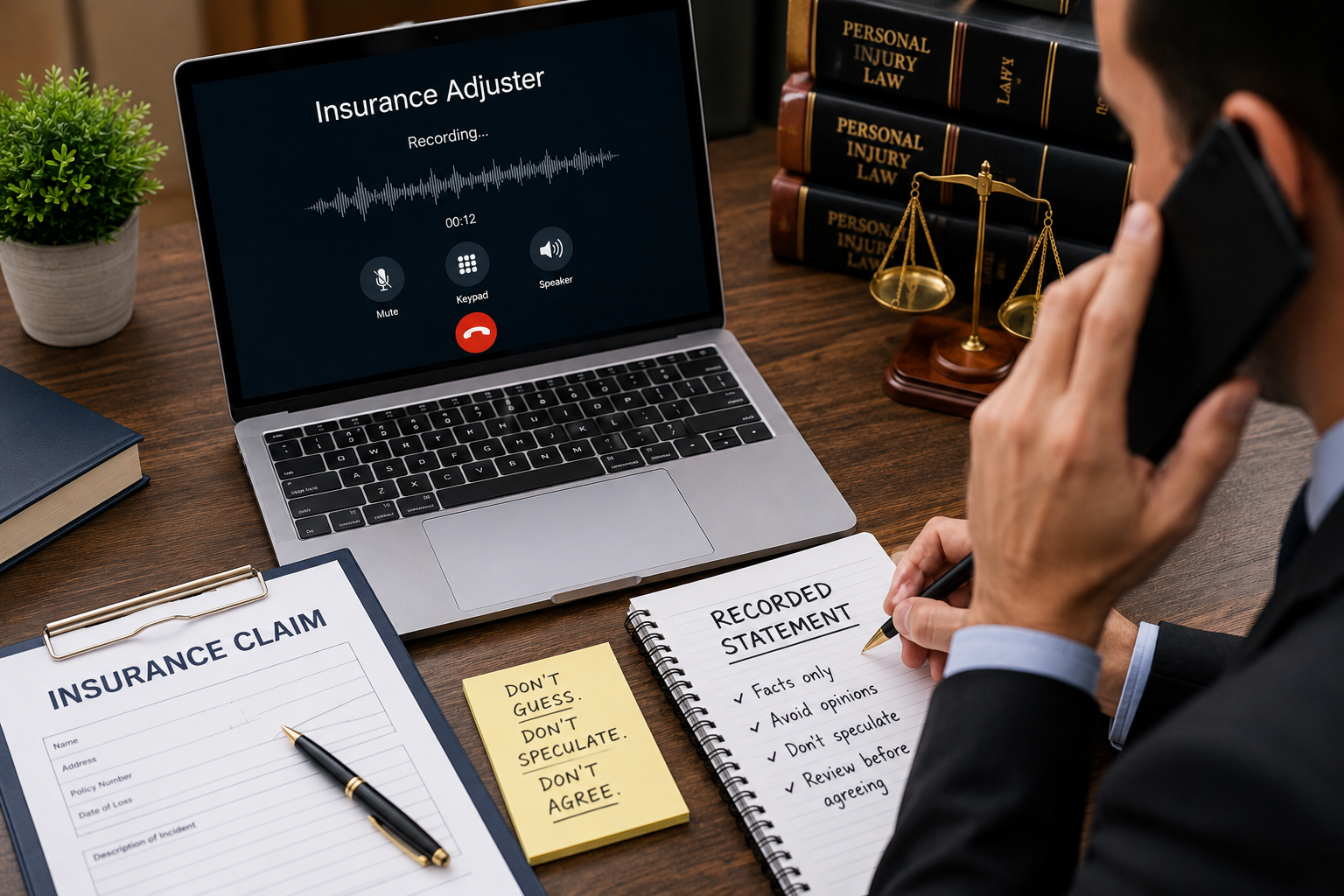
However, even when your own insurer requests a recorded statement, you still have rights. You do not have to guess at answers, speculate, or provide information you do not know. It is important to understand that recorded statements are often used to evaluate claims carefully and may later be reviewed for inconsistencies.
What if It’s the Other Party’s Insurance?
The situation is different when the request comes from the other party’s insurance company. In most cases, you are not legally required to provide a recorded statement to an opposing insurer. In fact, doing so without legal guidance can sometimes hurt your claim.
Insurance adjusters are trained to ask questions designed to gather information that may minimize the value of a claim or shift fault. Something as simple as saying “I’m feeling okay” shortly after an accident could later be used to argue that your injuries were not serious. Similarly, estimates about speed, timing, visibility, or medical history can become points of dispute.
Before agreeing to a recorded statement, it is important to understand the purpose of the request and how your words may be used later. If you have suffered significant injuries or damages, speaking with an attorney beforehand can help protect your interests.
There are also situations where an insurer may request an Examination Under Oath (EUO), which is more formal than a recorded statement. An EUO is typically conducted by an attorney for the insurance company and may be required under the terms of certain policies, especially in complex or disputed claims. Because the consequences can be significant, legal guidance is often recommended before participating.
In general, you should avoid rushing into a recorded statement without fully understanding your obligations and the potential impact on your case. While cooperation may be required in some situations, that does not mean you must answer every question immediately or without preparation.
If you have questions about a recorded statement request or concerns about how an insurance company is handling your claim, consulting with an experienced attorney can help you make informed decisions and protect your rights.